
What is the difference between a water-repellent and a waterproof jacket?
This misconception goes beyond consumer understanding alone. In fact, there are even some brands that use this terminology incorrectly.
We are therefore happy to explain to our customers that these two terms are very different and should never be used as synonyms.

Water-repellent or waterproof?
In the simplest terms, a waterproof jacket offers the highest level of protection against rain and snow, while a water-repellent jacket offers good but lower protection. Yet it is not that simple.
The difference between water-repellency and waterproofness comes from the properties of the fabric. A water-repellent material is woven so tightly that water has difficulty getting through it. So materials such as polyester and nylon, owing to their construction and fibre properties alone, hold out more water than cotton, which is a natural fibre and therefore more absorbent.

Water-repellency is a lower level of rain protection
If a garment resists water, it is usually because the fabric itself acts as a barrier between you and light drizzle. Tightly woven fabrics will offer a certain degree of water-repellency, as it takes some time for water to seep through the material.
Water-repellent fabrics do not absorb water but keep it on the surface for longer, so the water slides off the clothes instead of soaking them. This lets you stay dry for longer. But if you are out in the rain for a long time, or if the rain gets heavier, you will still get wet.
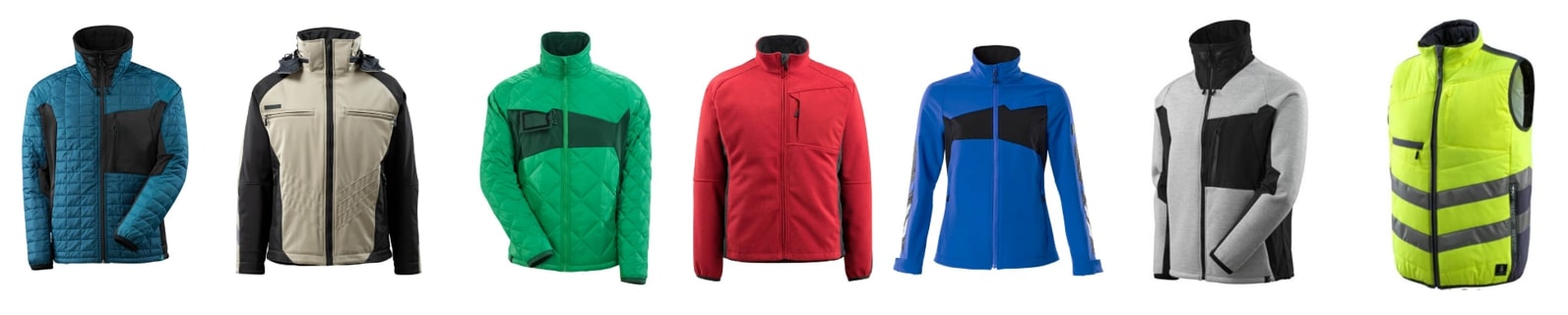
Check out our range of WATER-REPELLENT CLOTHING:
Why isn't every waterproof material good?
A waterproof material keeps water out completely. A plastic bag, for example, is waterproof. If the only goal is to keep rain out, you could simply put a plastic bag on under your jacket. But the moment you start moving, you will feel like you are in a sauna inside your jacket. You would overheat completely if you walked or worked in a plastic bag, and you would get wet from the inside – from your own sweat.
Quality clothing therefore uses a membrane layer that combines waterproof and breathable properties. This membrane keeps you dry on the inside – yes, from sweat – and on the outside from rain and snow. A membrane layer is a material with many tiny pores that help with breathing, but because these pores are so small, water cannot get through. That is what keeps you dry without overheating you ... impressive, isn't it?
It is worth noting that, as a general rule, higher-quality membranes cost more. Cheap clothing without a membrane may also meet waterproof standards – but you will only want to wear it if you plan to sit or stand still.
Another feature of waterproof clothing that sets it apart from water-repellent clothing is taped seams and waterproof zips. This means the seams and zips on the garments are either covered or treated with polyester strips that prevent water from getting in through the most vulnerable part of the garment – the seams and zips.
Check out our range of WATERPROOF CLOTHING: